SGSUPER GIO
FOR PARENTS AND EDUCATORS

A clear path through Grade 1.

See what Super Gio teaches, where children practice it, what counts as evidence, and what families should still observe beyond the screen.

3core standards areas14core focus areas4supporting growth areas
LEARNPRACTICESHOW IT
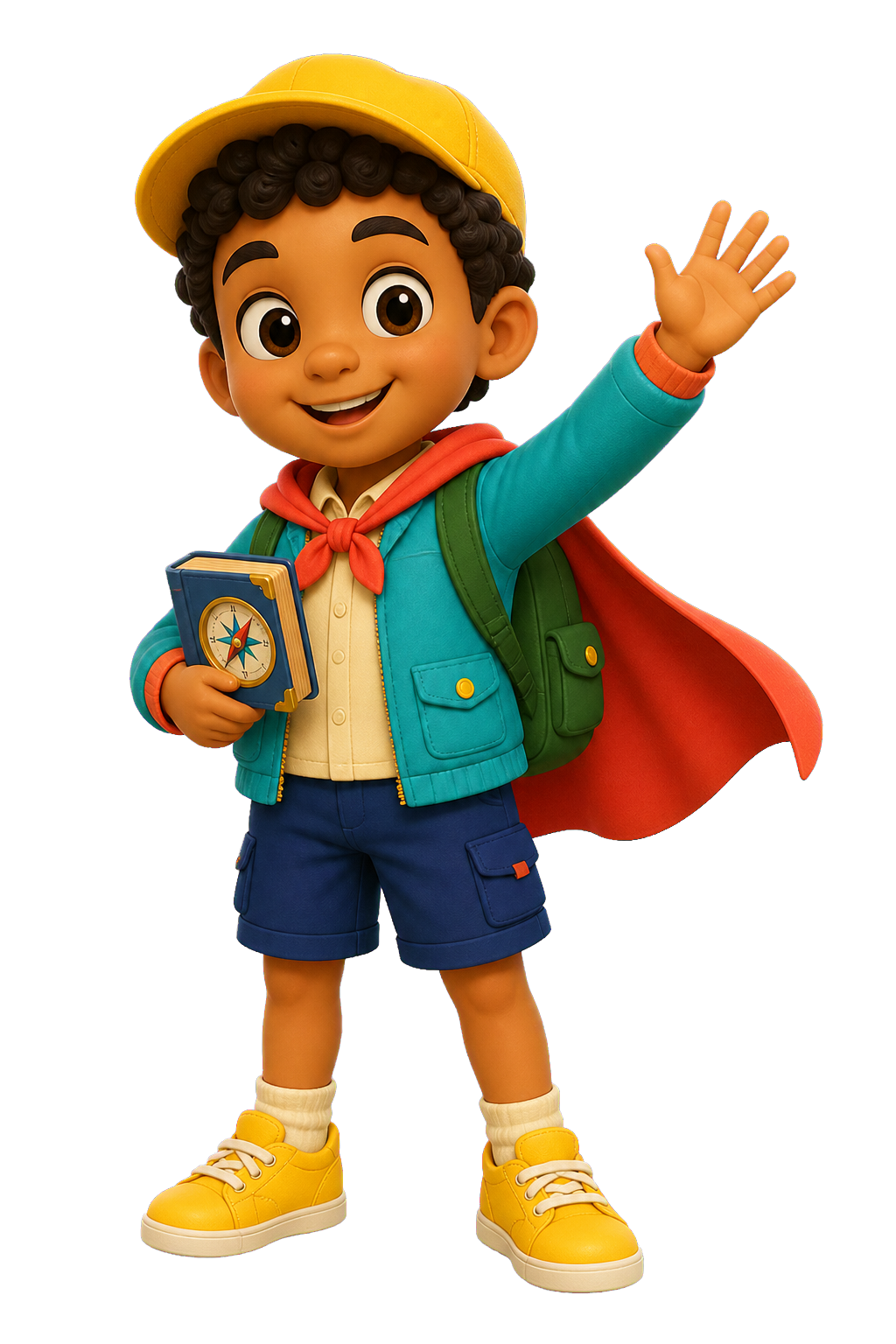
Super Gio holding his learning adventure book
THE GOALConfident, supported progress toward Grade 2
WHAT THIS GUIDE PROMISES

Useful evidence, without pretending a website is a school.

Super Gio supports instruction and family practice. It does not replace a teacher, school requirements, live discussion, adult observation, hands-on investigation, or the curriculum required by your state, country, district, or school.

THE COVERAGE MAP

Follow the evidence, not just the activity count.

Every core area below answers four parent questions: What is introduced? How is it practiced? What evidence is collected? Where can my child work on it?

GRADE 1 ENGLISH LANGUAGE ARTS

Words, meaning, expression, and communication

Super Gio organizes these activities around the major Grade 1 Common Core ELA strands. It provides structured practice, not a claim that one website can deliver every classroom experience in the standards.

CORE COVERAGE AREA

Foundational reading

Phonemic awareness, beginning and ending sounds, blending, short and long vowels, CVC words, digraphs, common word patterns, high-frequency words, and early fluency.

LEARN

Super Gio models sounds, blending steps, decoding patterns, and smooth reading with clear examples.

PRACTICE

Sequenced Reading Quest missions and decodable Reading Studio passages move from individual sounds into connected text.

MASTERY EVIDENCE

First-try mastery questions, successful use in fresh word examples, passage completion, comprehension accuracy, and repeated smoother reading provide evidence. Fluency still benefits from an adult listening to the child read.

CORE COVERAGE AREA

Literature and informational comprehension

Key details, characters, setting, sequence, main idea, supporting details, vocabulary in context, text features, comparison, and simple inference.

LEARN

Short models show how readers look back at a story or fact text before choosing an answer.

PRACTICE

Children read stories and informational passages, answer evidence-based questions, sequence events, and compare details.

MASTERY EVIDENCE

Accuracy on unseen meaning questions and the ability to point to a supporting detail are stronger evidence than finishing a passage alone.

CORE COVERAGE AREA

Language

Sentence structure, nouns and verbs, capitalization, punctuation, vocabulary relationships, word meaning, spelling patterns, and conventions in context.

LEARN

The Reading and Writing quests model how words and sentence parts work together to make meaning clear.

PRACTICE

Children edit choices, build sentences, use vocabulary, and apply conventions while writing their own responses.

MASTERY EVIDENCE

Mastery rounds check fresh examples. Saved writing gives better evidence when a child uses conventions independently, not only when choosing from options.

CORE COVERAGE AREA

Writing

Narrative, opinion, and informative writing; complete sentences; sequence; reasons; facts; revision; spelling; and sharing finished work.

LEARN

Super Gio breaks each genre into a clear purpose, useful structure, and child-friendly model.

PRACTICE

Writing Quest missions build component skills, while the Writing Workshop lets children draft, revise, and submit original samples.

MASTERY EVIDENCE

Saved samples show length, capitals, punctuation, and genre structure. An adult should also judge meaning, organization, handwriting when relevant, and growth across several pieces.

CORE COVERAGE AREA

Speaking and listening

Listening for key details, asking clarifying questions, taking turns, building on another speaker's idea, and describing clearly in complete sentences.

LEARN

Each focused station models one useful communication move with warm narration and simple examples.

PRACTICE

Learn, Practice, and Challenge rounds use listening messages, multi-speaker exchanges, and optional private voice rehearsal.

MASTERY EVIDENCE

Compact completion evidence shows successful choices. Real readiness also requires live conversation with adults and children, where turn-taking, volume, clarity, and responsiveness can be observed.

GRADE 1 MATHEMATICS

Number sense, reasoning, measurement, and shape

The Math Quest follows the major Grade 1 Common Core domains and emphasizes choosing strategies and explaining relationships, not only getting an answer.

CORE COVERAGE AREA

Operations and mathematical reasoning

Addition and subtraction stories, add-to, take-from, put-together, take-apart, compare situations, unknowns in different positions, equations, and operation relationships.

LEARN

Visual models connect actions in a story to addition, subtraction, equations, and unknown values.

PRACTICE

Children solve varied story types, choose matching equations, compare strategies, and explain what an unknown represents.

MASTERY EVIDENCE

Fresh problem structures and unknown positions check whether a child can reason rather than memorize one question pattern.

CORE COVERAGE AREA

Fluency within 10 and 20

Accurate addition and subtraction within 20, with growing fluency within 10 through counting on, making ten, decomposing, doubles, and related facts.

LEARN

Super Gio introduces efficient strategies and the relationship between addition and subtraction.

PRACTICE

Repeated but varied questions encourage flexible strategy use. Accuracy and reasoning come before speed.

MASTERY EVIDENCE

First-try accuracy across mixed facts and the ability to explain a strategy are useful evidence. Timed performance is not treated as the only measure of fluency.

CORE COVERAGE AREA

Place value and counting to 120

Counting, reading and writing numbers, tens and ones, comparing two-digit numbers, ten more or less, and reasoning about number magnitude through 120.

LEARN

Base-ten ideas are introduced through grouped objects, tens, ones, and number relationships.

PRACTICE

Children compose and decompose numbers, compare values, find missing numbers, and connect numerals to quantities.

MASTERY EVIDENCE

Unseen numbers and representations check whether place-value understanding transfers beyond a memorized example.

CORE COVERAGE AREA

Measurement, time, and data

Comparing and measuring length with equal units, telling and writing time to the hour and half-hour, organizing data, and answering questions about categories.

LEARN

Visual models show equal measurement units, clock parts, and how data displays represent counted objects.

PRACTICE

Children compare lengths, read clocks, interpret simple charts, and answer how-many-more or how-many-fewer questions.

MASTERY EVIDENCE

Mixed representations and new data sets provide evidence. Real clocks, rulers, objects, and family routines remain important hands-on practice.

CORE COVERAGE AREA

Geometry

Defining and non-defining attributes, composing two- and three-dimensional shapes, and partitioning circles and rectangles into halves and fourths.

LEARN

Clear visual examples separate essential shape attributes from size, color, and orientation.

PRACTICE

Children identify, compare, compose, decompose, and partition shapes in varied positions.

MASTERY EVIDENCE

New shape arrangements check transfer. Building, folding, drawing, and cutting physical shapes add evidence a screen cannot fully provide.

GRADE 1 NGSS SCIENCE

Patterns, structures, evidence, and simple design

Super Gio centers the Grade 1 science core on the NGSS topics of organism structure and heredity, light and sound, communication, and sky patterns. Digital investigations support, but do not replace, real observation and classroom investigation.

CORE COVERAGE AREA

Structures, functions, parents, and offspring

External plant and animal structures, how parts support survival and needs, similarities between parents and offspring, and behaviors that help young survive.

LEARN

Science worlds model structure and function with familiar organisms and clear cause-and-purpose language.

PRACTICE

Children connect body or plant parts to functions, compare related organisms, and explore structure evidence in the virtual lab.

MASTERY EVIDENCE

Fresh examples and Predict, Test, Observe, Explain records show whether children can make a supported claim. Outdoor and classroom observations add essential evidence.

CORE COVERAGE AREA

Light, sound, and communication

Vibration and sound, light and visibility, transparent, translucent, and opaque materials, and using light or sound patterns to communicate information.

LEARN

Models introduce vibration, light paths, material behavior, and planned signals.

PRACTICE

Children run virtual sound and material tests, record observations, and design repeating communication signals.

MASTERY EVIDENCE

A correct claim plus directly supporting evidence is stronger than topic recall. Safe real-world tests with adult guidance remain important.

CORE COVERAGE AREA

Sky patterns

Patterns in the apparent movement of the Sun, Moon, and stars, plus changes in daylight across times of year.

LEARN

Visual sequences help children notice position, order, repetition, and changes over time.

PRACTICE

Children compare morning, midday, and evening observations and reason about what is likely to happen next.

MASTERY EVIDENCE

Pattern questions and recorded observations provide initial evidence. Long-term sky and daylight observations with a family or class are needed for fuller understanding.

CORE COVERAGE AREA

Simple engineering

Defining a simple problem, sketching or selecting a solution, choosing materials by useful properties, testing a design, and improving it with evidence.

LEARN

Super Gio models a child-friendly design loop: ask, imagine, make, test, and improve.

PRACTICE

Signal, structure, and material activities connect science observations to a useful design goal.

MASTERY EVIDENCE

Children should explain why a design choice fits the goal and use test evidence to suggest an improvement. Building a physical model provides the strongest evidence.

SUPPORTING AND LOCALLY GUIDED AREAS

Important growth beyond one national checklist

These areas strengthen the whole learning experience. Super Gio does not present them as alignment to one universal Grade 1 standard because community priorities, health guidance, creative goals, and local curricula differ.

SUPPORTING GROWTH

Community and citizenship

Helpers, rules, maps, needs and wants, traditions, history, cooperation, and responsible choices.

LEARN

Super Gio introduces age-appropriate civic and community ideas through familiar situations.

PRACTICE

Children make choices, read simple maps, compare needs and wants, and reason about community responsibilities.

MASTERY EVIDENCE

Quest evidence shows understanding inside Super Gio. Families and schools should connect these ideas to local history, laws, culture, and community expectations.

WHERE IT LIVES
SUPPORTING GROWTH

Logic and executive thinking

Sorting, patterns, sequences, spatial routes, clues, planning, flexible strategy use, and checking work.

LEARN

Super Gio models how to notice a rule, organize information, and revise a plan.

PRACTICE

Logic Quest gives short, playful problems that build persistence and careful reasoning.

MASTERY EVIDENCE

Fresh puzzles show transfer within the platform. Logic Quest is enrichment and does not claim alignment to one national Grade 1 content standard.

WHERE IT LIVES
SUPPORTING GROWTH

Creative projects

Drawing, making, storytelling, design, performance, and combining ideas across subjects.

LEARN

Planned project cards will model a goal, materials, steps, and reflection questions.

PRACTICE

Children will create an original product rather than only selecting an answer.

MASTERY EVIDENCE

A finished project, the child's explanation, and adult observation will provide evidence. This is a supporting growth area guided by family and local curriculum goals.

SUPPORTING GROWTH

Healthy and hands-on growth

Movement, routines, fine-motor work, physical materials, outdoor observation, practical measurement, and safe family activities.

LEARN

Planned activities will give short adult notes, safe setup guidance, and a clear learning purpose.

PRACTICE

Children will move, build, measure, observe, draw, sort, and talk away from the screen.

MASTERY EVIDENCE

An adult's observation and the child's real-world demonstration matter most. These activities support whole-child growth and must follow family, school, health, and local guidance.

WHAT THE LABELS MEAN

Completed is not the same as mastered. Mastered is not the whole readiness decision.

01COMPLETED

The activity was finished.

This records participation and forward movement. A child may have used retries, hints, or support, so completion alone does not prove independent skill.

02MASTERED

The skill was shown in fresh examples.

Super Gio looks for strong first-try performance in a world mastery round or clear evidence in a focused studio. Mastery is skill-specific and should remain stable over time.

03GRADE 2 READY

Evidence comes together across settings.

Readiness means the child can use core Grade 1 skills with growing independence across digital work, books, writing, conversation, physical materials, and real situations.

LOOK FOR A PATTERN

A stronger readiness picture includes:

  • Repeated success, not one perfect session
  • Independent explanations and strategy use
  • Reading, writing, speaking, and math beyond multiple-choice tasks
  • Hands-on science, measurement, building, drawing, and observation
  • Teacher feedback, school expectations, and local requirements
SUPER GIO GRADUATION

A platform milestone, not a formal placement decision.

The Graduation Quest combines Grade 1 skills and can highlight strengths or practice needs. A school, teacher, or qualified educator should make formal promotion, placement, or learning-support decisions.

Open Graduation Quest
BEYOND THE SCREEN

Two practical learning areas are on the way.

These planned routes will add physical making, observation, movement, and project evidence without changing the core quest structure.

OFFICIAL REFERENCES

Read the source standards.

This guide uses these official standards pages as its high-level reference points. Adoption and implementation vary by location, so families should also consult their school or local education authority.